🇩🇪 Study in Germany · From India
Study in Germany
— your complete 2027 guide.
Tuition-free public universities. Europe's largest economy. An 18-month post-study job-search visa — and permanent residence in as little as 21 months. Your dedicated Germany desk at The Mentors Circle, from APS to visa.
★ 5.0 · 370 Google reviews · 15,000+ students placed
Get My Free Germany Plan → Free counselling · A senior counsellor calls you back within one working dayonly a small semester fee
QS World 2027 — #1 in the EU
after you graduate
with a Blue Card + B1 German
Free counselling
Talk to a Germany advisor — free.
Tell us your profile and goals. A senior counsellor calls you back within one working day on WhatsApp with:
- A university shortlist matched to your grades, field and budget
- An honest read on your APS, dMAT and admission chances
- Scholarships (DAAD, Deutschlandstipendium) you actually qualify for
- A month-by-month plan for the Winter or Summer intake
Why Germany works
Six reasons Germany earns a serious look.
Facts, not sales talk — decide for yourself.
Tuition-free public universities
Public universities charge no tuition — only a semester fee of about €100–€350. World-class engineering and research without the price tag.
18-month job-search stay-back
After graduating, stay 18 months to find skilled work — leading to an EU Blue Card and one of Europe's fastest routes to permanent residence.
Europe's largest economy
Home to BMW, Siemens, SAP and Bosch. Deep, stable demand for engineering, IT, data and management graduates.
140 days of work a year
Work part-time while you study — 140 full or 280 half days per year at roughly €13–€16 an hour, and more with German.
PR in as little as 21 months
With a skilled job and B1 German, a permanent settlement permit can come in under two years — faster than most of Europe.
English-taught master's
A wide and growing range of English-taught master's — no German needed to study, though it helps for part-time work and daily life.
The angle nobody tells you
A world-class degree with zero tuition.
Germany charges no tuition at its public universities — you pay only a semester contribution of about €100–€350. A degree from TU Munich or RWTH Aachen — among the best in the world for engineering — costs a fraction of the UK, US or Australia. Add an 18-month stay-back, an EU Blue Card and permanent residence in under two years, and few destinations match Germany for long-term value.
Popular courses
What Indian students study in Germany.
The programmes with the strongest hiring demand and clearest routes to work and residence.
MSc Computer Science / IT
Germany's strongest field for international students — huge demand across Berlin, Munich and Frankfurt, with many English-taught programmes.
Talk to an advisor → Tech & EngineeringMSc Data Science / Artificial Intelligence
Booming demand; offered in English at TUM, RWTH and many public universities. Roles span industry, banking and research.
Talk to an advisor → Tech & EngineeringMechanical & Automotive Engineering
Germany's signature strength — Mercedes, BMW, Bosch and VW. Among the clearest degree-to-job pathways in the country.
Talk to an advisor → Tech & EngineeringElectrical & Embedded Systems
Chips, automation and robotics drive demand — strong at TU Munich, KIT and TU Dresden, and on shortage-occupation lists.
Talk to an advisor → Business & FinanceMBA / MSc Management
Frankfurt finance, Mannheim and leading private business schools. Some programmes ask for GMAT and work experience.
Talk to an advisor → Energy & EnvironmentMSc Renewable Energy & Sustainability
Germany leads the global energy transition — strong demand for energy, environmental and sustainability engineers.
Talk to an advisor →Where you could study
Germany's top universities, ranked.
QS World University Rankings 2027. We help you apply across public and private universities.
The numbers
What it costs & what you need.
Real figures, updated for the 2027 intakes.
Eligibility
- Bachelor's70%+ in 12th
- Master's3–4 yr Bachelor's, 65%+
- UG IELTS6.0–6.5
- PG IELTS6.5 (no band <6.0)
- APSrequired (German unis)
Tuition & living
- Public tuition€0 + €100–350/sem
- Private tuition€10K–€20K
- Blocked account€11,904 (held)
- Living costs€11K–€14K
- Health insurance€1,300–1,700
Work & intakes
- Part-time140 / 280 days
- Breaksup to 40 hrs/week
- Post-study18 months
- Major intakesWinter · Summer
- Visa processing6–12 weeks
Eligibility
Do you qualify? The 2027 requirements.
Typical floor requirements for German universities — individual programmes, and subject-match rules, can ask for more.
For Master's programmes
- Recognised Bachelor's (3–4 yr) with ~65%+ typical
- Subject must closely match the master's — German universities are strict
- APS certificate required for German-accredited universities
- dMAT for eligible fields from Summer 2027
- GRE/GMAT for some management programmes
For Bachelor's programmes
- Class 12 with ~70%+
- 12-year schooling often needs 1 completed year of an Indian bachelor's or a Studienkolleg (foundation year)
- TestAS may be required (JEE can exempt)
- APS certificate required
English language tests
- IELTS Academic: 6.5 (PG) / 6.0 (UG), typically no band below 6.0
- TOEFL iBT widely accepted
- German-taught programmes need TestDaF / DSH (~C1)
- Basic German (A1–A2) advised for the visa and daily life
Enter your percentage to see your likely eligibility for Germany programmes.
Figures are typical floors, not guaranteed admission, and APS/dMAT rules are new. Talk to a TMC advisor for a profile-specific check.
Funding your studies
Scholarships for Indian students in Germany.
Public tuition is already free — these help with living costs, and private-university fees.
| Scholarship | Sponsor | Amount | Eligibility | Availability |
|---|---|---|---|---|
| DAAD Scholarships | German Academic Exchange Service | Monthly stipend + extras | Merit-based; master's & research, competitive | |
| Deutschlandstipendium | Universities + private sponsors | €300 / month | Merit + need, applied via the university | |
| Erasmus+ | European Commission | Mobility grant | Exchange / partnered programmes | |
| Heinrich Böll Scholarship | Heinrich Böll Foundation | Monthly stipend | Merit + social engagement | |
| Konrad-Adenauer-Stiftung | KAS | Monthly stipend | Master's & PhD, values-based | |
| University tuition waivers | Private universities | Partial tuition | Strong academic profiles |
Amounts and eligibility change each cycle — confirm current values on the official page. Talk to a TMC advisor for a profile-specific scholarship match.
Top cities to study in
Where you'll actually live.
Different cities, different budgets and job markets. Pick the one that matches your course and career.
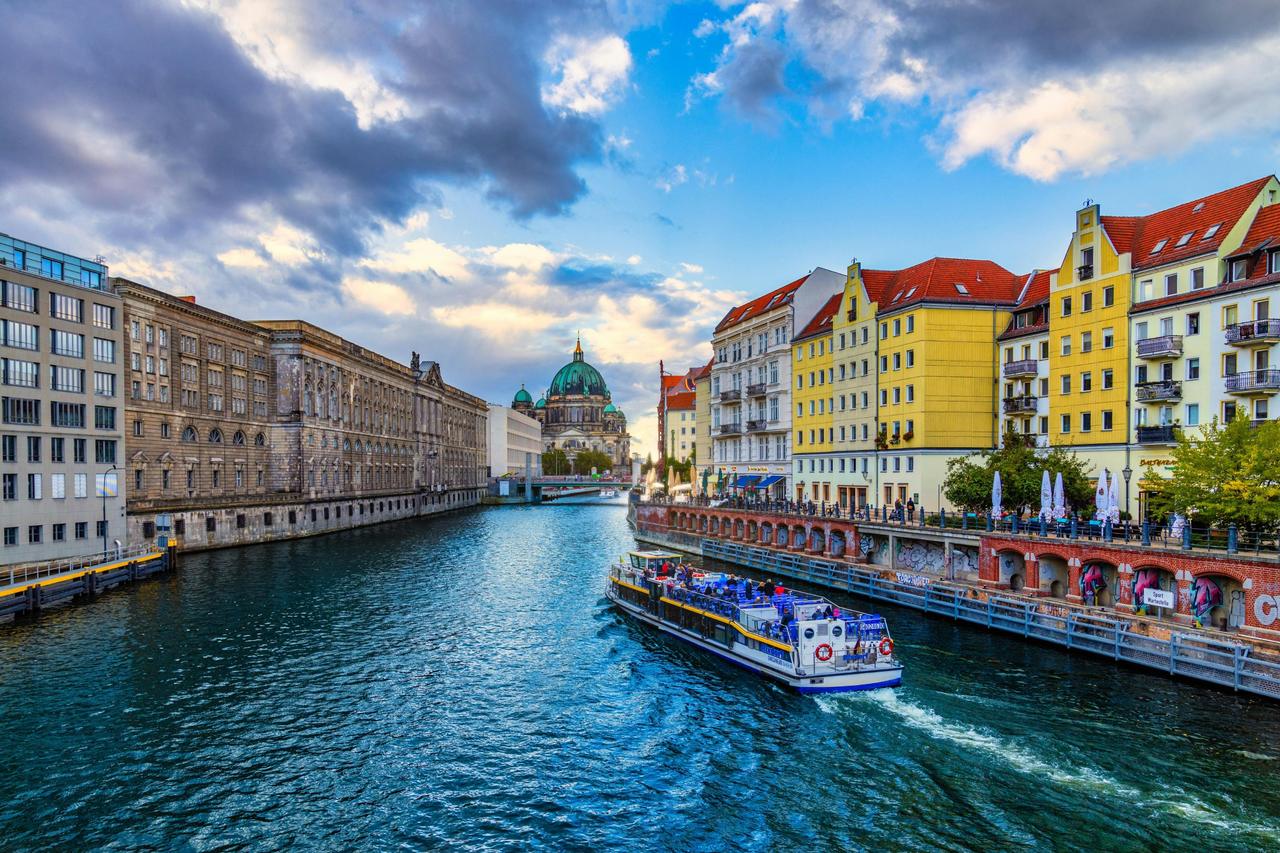
Berlin
Humboldt, FU and TU Berlin. Germany's biggest startup scene, strong in arts and research, and surprisingly affordable for a capital — rent from about €600–€900 for a room.
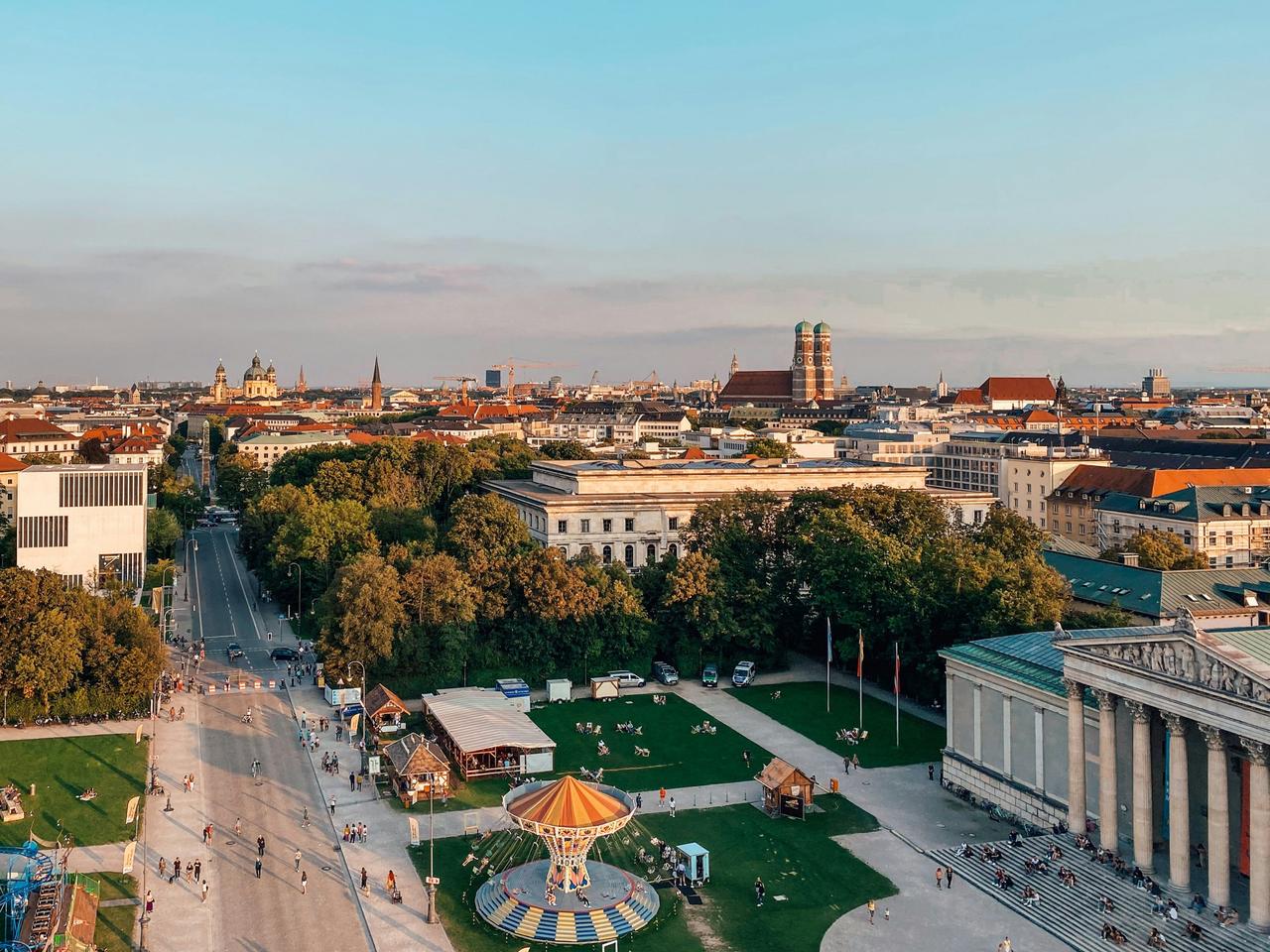
Munich
TU Munich (ranked #1 in the EU) and LMU. BMW and Siemens country — the deepest engineering and tech job market in Germany, but also the most expensive city.

Aachen
RWTH Aachen, one of Europe's top engineering universities, on the Dutch–Belgian border. A true student city with strong industry links and lower costs than Munich.
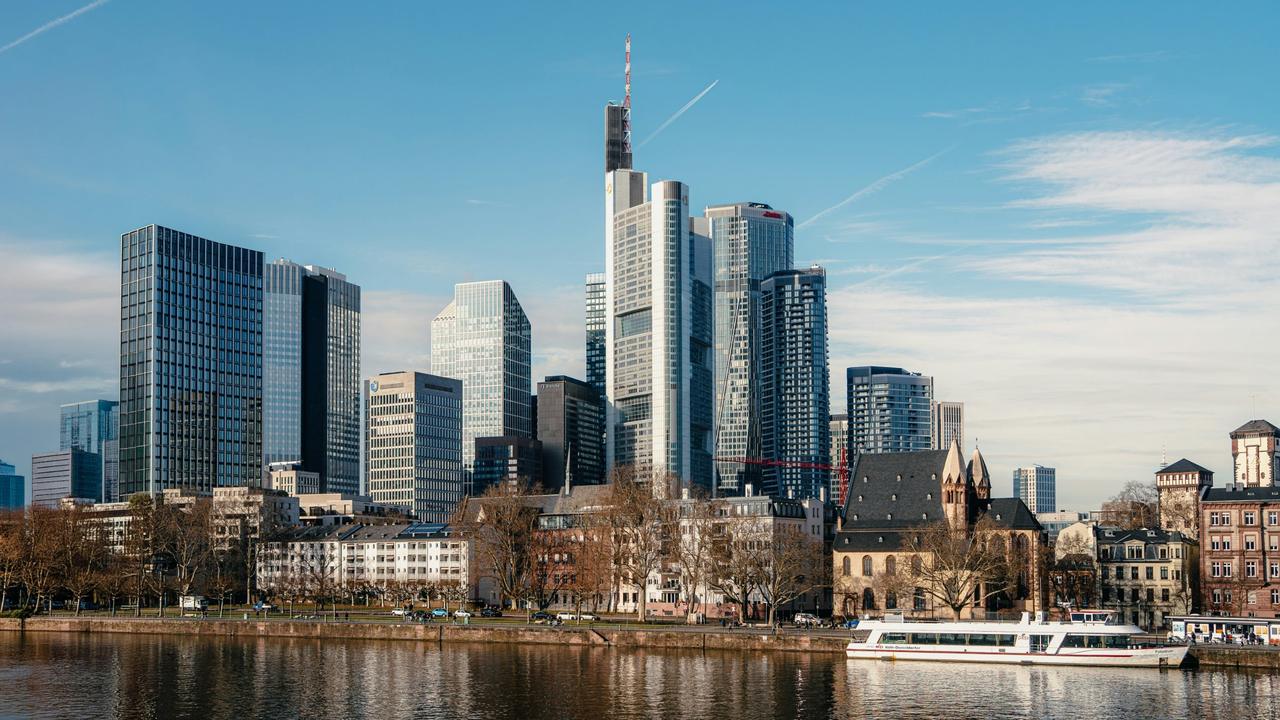
Frankfurt
The European Central Bank, global banks and the Big Four. The clearest city for finance, consulting and economics graduates, with a major international airport.
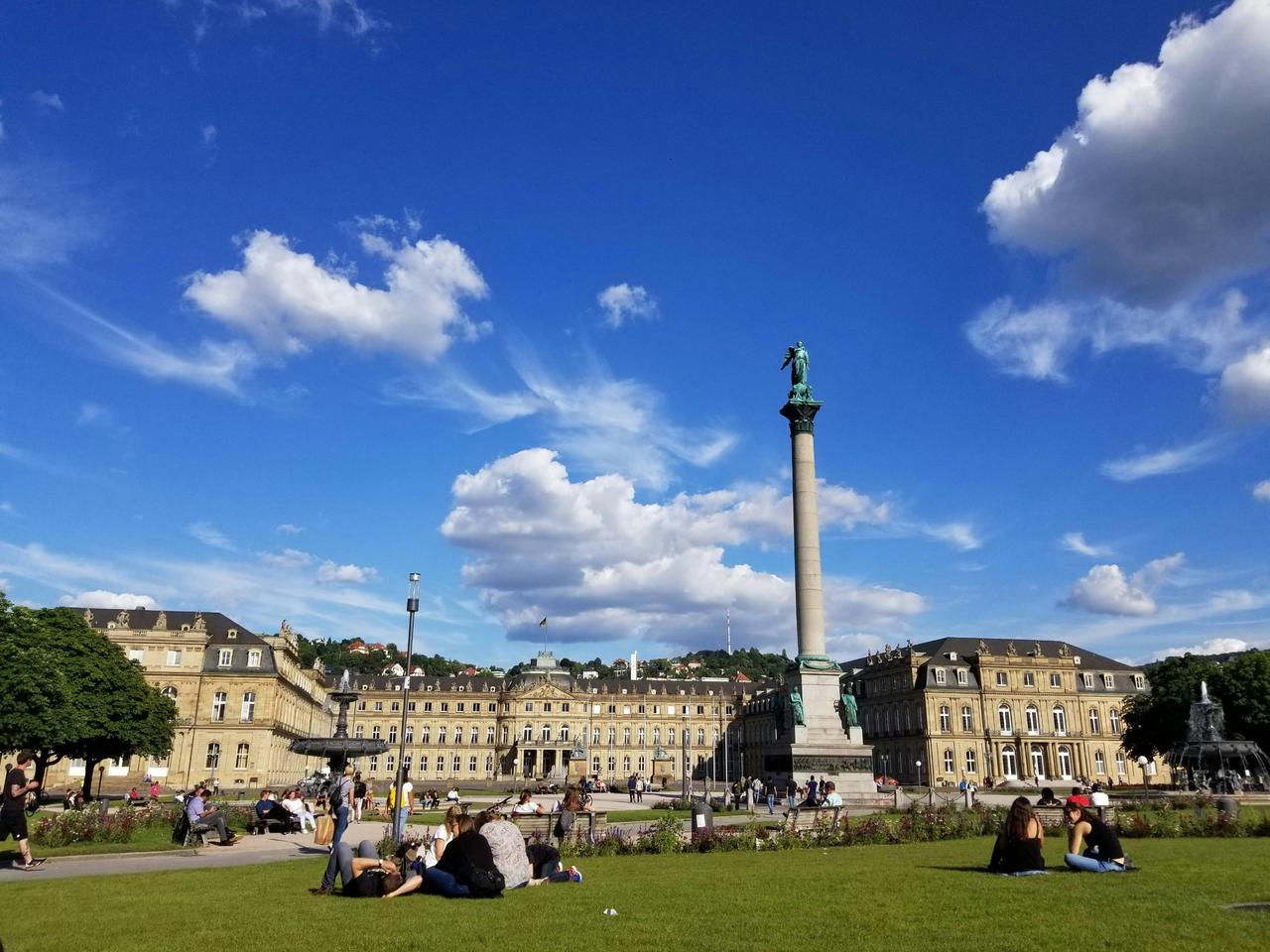
Stuttgart
Mercedes-Benz and Porsche are headquartered here. Mechanical, automotive and manufacturing engineering demand is among the strongest in the country.
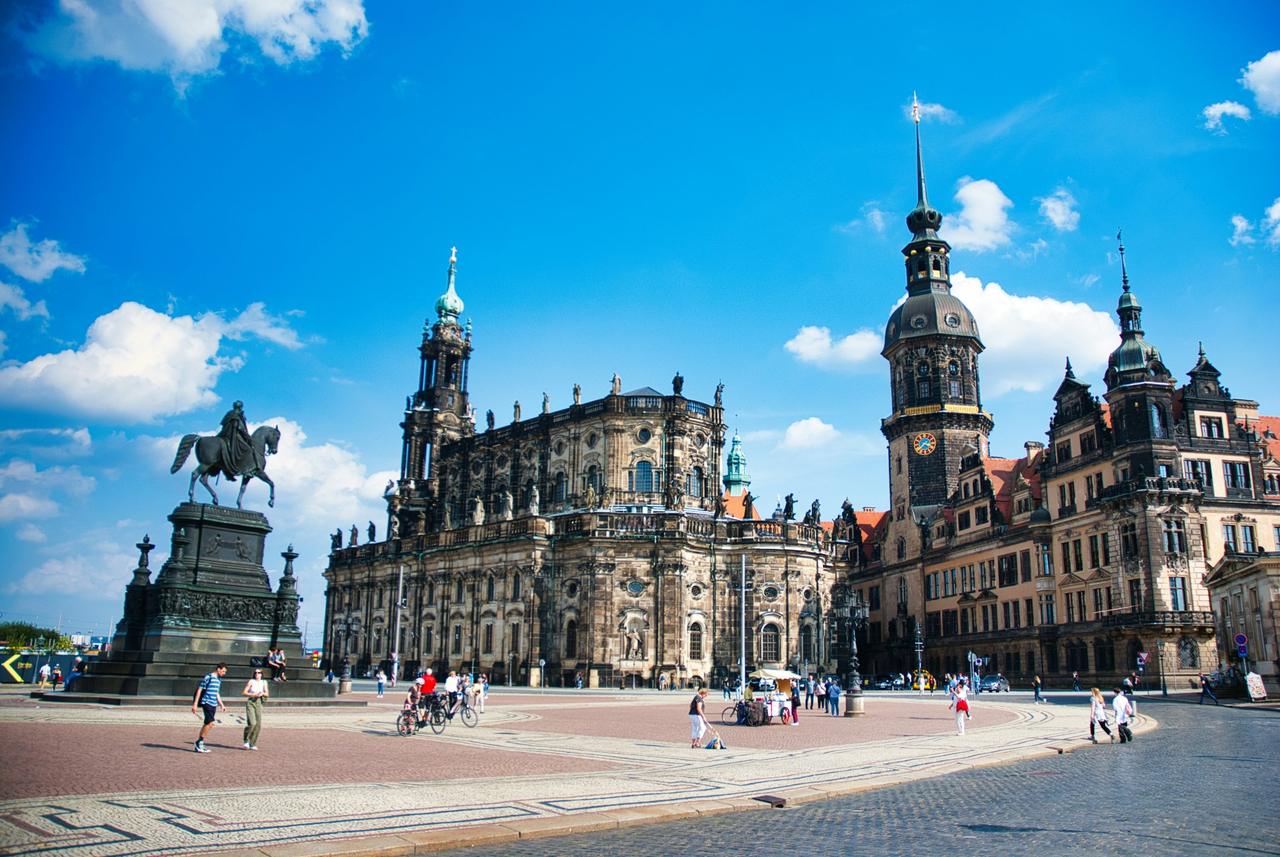
Dresden / Karlsruhe
TU Dresden and KIT anchor Germany's chip and electronics corridor. Strong computer-science and research programmes with notably lower living costs.
After your degree
Careers and the Blue Card.
Graduates get 18 months to find skilled work, then an EU Blue Card and a fast route to PR. These sectors hire the most.
IT & Software
Developers, data and cloud roles across Berlin, Munich and Frankfurt. Several ICT occupations are on shortage lists with lower Blue Card salary thresholds.
Mechanical & Automotive
The heart of German industry — Mercedes, BMW, Bosch and VW. Deep, stable demand for mechanical, automotive and production engineers.
Electrical & Electronics
Chips, automation and robotics. KIT, TU Munich and TU Dresden feed a fast-growing semiconductor and automation sector.
Engineering & Renewable Energy
Germany's energy transition drives demand for civil, environmental and energy engineers nationwide.
Finance & Consulting
Frankfurt (the ECB and global banks) and the Big Four. Strong for business, finance and economics graduates.
Healthcare & Research
A huge research ecosystem (Max Planck, Fraunhofer) and healthcare demand — many roles reward or require German.
Guides & insights
Read before you apply to Germany.
Straight-talking, source-backed guides from the TMC Germany desk — APS, the dMAT, costs and the visa.
APS Certificate for Germany: A Step-by-Step Guide for Indian Students (2027)
APS certificate for Germany 2027: what it is, who needs it, the ₹18,000 fee, 3–10 week timeline, documents and the step-by-step process from India.
Read the guide →
Studying in Germany from India: The Complete 2027 Guide
Study in Germany from India in 2027: tuition-free universities, the APS and dMAT, the blocked account, student visa, work rights and PR — explained cl…
Read the guide →
Germany Blocked Account Guide for Indian Students 2027
Learn the Germany Blocked Account amount for 2026, required documents, top providers, timelines, and step‑by‑step process for Indian students applying…
Read the guide →How we work
Four steps from profile to flight.
The same diligence we apply to every country file.
Profile review
30-minute call — academics, field, budget, and an honest read on public vs private, and whether APS and the dMAT apply to you.
APS, tests & shortlist
Start APS early (it gates everything), sit IELTS and the dMAT where needed, and build a shortlist of public and private universities matched to your profile.
Applications + SOP
Via uni-assist or direct portals. Our editorial team writes the SOP and LORs, submits, tracks offers, and chases scholarships where possible.
Blocked account & visa
Sperrkonto, insurance, the VIDEX form on digital.diplo.de and VFS biometrics. Typically 6–12 weeks once the file is clean.
Get ready
Document checklist.
What you'll need for admission and for the student visa.
For admission
- 10th, 12th & degree marksheets
- IELTS / TOEFL scorecard
- APS certificate (German universities)
- Statement of Purpose (we write it with you)
- Two letters of recommendation
- CV / resumé · Passport
For the student visa
- Admission letter (Zulassung) + fee receipt
- Blocked account (€11,904) confirmation
- Health & travel insurance
- APS certificate · academic documents
- VIDEX form + biometrics at VFS
- Visa SOP (we prepare the file)
Germany vs other destinations
Germany vs Ireland vs UK vs Australia — side-by-side.
An honest comparison for the 2027 intakes. We counsel for all four — this is the same table we draw on the whiteboard.
| Factor | Germany | Ireland | UK | Australia |
|---|---|---|---|---|
| Master's duration | 1–2 years | 1 year | 1 year | 1.5–2 years |
| Tuition (Master's) | €0 public / €10–20k private | ₹14–28 lakh | ₹18–35 lakh | ₹20–35 lakh |
| Part-time work | 140 / 280 days per year | 20 hrs/week | 20 hrs/week | 24 hrs/week |
| Post-study work visa | 18 months | 2 years (Stamp 1G) | 2 yrs → 18 mo from Jan 2027 | 2–4 years (485) |
| Funds to show | €11,904 blocked account | €10,000/yr + tuition | £1,023–1,334/mo (9 mo) | AUD ~29,700/yr |
| PR pathway | Blue Card → PR in 21 months (B1 German) | Stamp 4 in 21 mo (CSEP) | ILR in 5 years | 189/190 visa, 3–5 yrs |
Verified Nov 2026 against make-it-in-germany.de, irishimmigration.ie, gov.uk and homeaffairs.gov.au. Figures are indicative — always confirm before applying.
Intake timeline
Winter 2027 intake — month-by-month plan.
Working back from a Winter (Sep/Oct) 2027 start. Summer 2027 applicants shift everything about six months earlier.
| Month | What you do | Why it matters |
|---|---|---|
| Aug–Sep 2026 | Free counselling, profile assessment and shortlist. Start the APS application. | APS takes 3–10 weeks and gates everything — begin it first. |
| Sep–Nov 2026 | Sit IELTS (and the dMAT if eligible). APS certificate issued. | You need APS in hand before most German-university applications. |
| Nov 2026–Mar 2027 | Applications via uni-assist and university portals. | Winter deadlines cluster around 15 Mar–31 May — apply as they open. |
| Apr–Jun 2027 | Admission letters (Zulassung) arrive; accept your place. | An unconditional offer is what the student visa needs. |
| Jun–Jul 2027 | Open the blocked account (€11,904) and arrange health insurance. | The money gate — set up the Sperrkonto as soon as you accept. |
| Jul–Aug 2027 | Visa file on digital.diplo.de, then VFS biometrics. | The visa takes 6–12 weeks — book the appointment the moment documents are ready. |
| Sep–Oct 2027 | Fly, enrol (Immatrikulation) and register your address (Anmeldung). | Arrive early to sort housing, a bank account and your residence permit. |
Questions
Questions we hear most often.
How much does it cost to study in Germany from India?
What is the APS certificate and do I need it?
What is the dMAT?
Can I work while studying, and can I settle in Germany?
Do I need to know German?
Should I target the Winter or Summer intake?
Study in Germany from India — 2027 Intakes
The Mentors Circle helps Indian students study in Germany across its tuition-free public universities and leading private institutions — including the Technical University of Munich (QS World #25 and the top-ranked university in the EU), LMU Munich, Heidelberg University, RWTH Aachen and the Free University of Berlin. Public universities charge no tuition, only a semester contribution of about €100–€350.
Germany offers Indian students an 18-month post-study job-search visa, part-time work rights of 140 full or 280 half days a year, and one of Europe's clearest routes to permanent residence — an EU Blue Card followed by settlement in as little as 21 months with B1 German. Applicants to German-accredited universities need the APS certificate (₹18,000), and certain master's applicants from Summer 2027 also sit the new dMAT aptitude test. The student visa requires a blocked account of €11,904 as proof of funds.
Our free counselling for Germany covers university shortlisting (public and private), APS and dMAT guidance, SOP preparation, scholarship matching (DAAD and Deutschlandstipendium), blocked-account and visa documentation, and pre-departure support. Walk in at our Mumbai HQ or Noida office, or start on WhatsApp — a senior counsellor calls you back within one working day.
We guide students to Ireland, UK, USA, Canada, Australia, and more
Six destinations. One specialist counsellor for each.
Each destination has a dedicated specialist at our offices who tracks visa rules, scholarship deadlines and graduate employment outcomes. Click through for country-specific costs, scholarships and university lists.
Ready to plan your Germany move?
Share your details — a senior counsellor calls back within one working day with a personalised shortlist, an APS/dMAT check and a scholarship match. Completely free.
Book my free Germany session →Prefer to talk in person? Meet our study abroad consultants in Noida — Sector 18, walk-ins welcome.