Ireland for Indian students — since 2014
Study in Ireland for Indian Students
— your complete 2026 guide to universities, fees, scholarships & visa.
✓ 14 Irish university partnerships✓ 1-year Master's degrees✓ 2-year post-study work visa (Stamp 1G)✓ Pathway to Stamp 4 long-term residency✓ English-speaking EU — degree recognised in all 27 EU statesCompiled by the Mentors Circle Counselling Team · Reviewed by senior Ireland counsellor · Updated
Get My Ireland Study Plan → Free counselling · A senior counsellor calls you back within one working dayRent, food & transport. Dublin sits at the top of the range.
Most students pay €18k–€25k. UG is €10k–20k/year.
Stamp 1G — work without employer sponsorship.
After 2 yrs of qualifying work in Critical Skills jobs.
Explore your options
Explore Ireland's top universities.
Compare leading Irish universities to find the best fit for your academic goals and career aspirations — every card opens a full guide with verified fees, scholarships and entry requirements.
Trinity College Dublin (TCD)
Dublin, IrelandIreland's highest-ranked university (QS #75) — prestige, research and a historic city-centre campus.
Explore Trinity →University College Dublin (UCD)
Dublin, IrelandIreland's largest university — Smurfit MBA, computing, engineering and finance with global reach.
Explore UCD →University College Cork (UCC)
Cork, IrelandSecond-oldest university in Ireland — research excellence in pharma, food science and business.
Explore UCC →Dublin City University (DCU)
Dublin, IrelandModern, career-focused university with strong industry links in computing and analytics.
Explore DCU →University of Galway
Galway, IrelandLeading research university on the west coast — medical devices, biomed and data analytics.
Explore Galway →University of Limerick (UL)
Limerick, IrelandDynamic campus university with strong industry connections and excellent placement programmes.
Explore UL →National College of Ireland (NCI)
Dublin, IrelandCareer-focused college in the IFSC — flexible business, computing and fintech programmes. Our students' #1 choice.
Explore NCI →Atlantic Technological University (ATU)
Galway / Sligo, IrelandValue tuition, January intake options and hands-on medtech, computing and sustainability courses.
Explore ATU →Dublin Business School (DBS)
Dublin, IrelandBudget-friendly Dublin option for business, computing and MBA programmes in the city centre.
Explore DBS →Free counselling
Talk to an Ireland specialist — free.
Tell us your profile and goals. A senior counsellor calls you back within one working day on WhatsApp with:
- A university shortlist matched to your grades and budget
- An honest read on your admission and visa chances
- Scholarship options you actually qualify for
- A month-by-month plan for the January or September 2027 intake
Live from our visa desk
Ireland student visa decisions — the real numbers.
We track every student-visa decision published by the Embassy of Ireland in New Delhi, compiled daily from application numbers and decision status only — no personal data.
Data window: 12 May 2026 – 22 Oct 2026 · Auto-updated 24 October 2026 · Compiled daily from official Embassy publications
Source: visa decisions published by the Embassy of Ireland, New Delhi — compiled and analysed daily by The Mentors Circle visa desk. No personal data is used. For the month-by-month history, see our processing-time report.
How we calculate these figures
Fresh off the embassy list
Recent visa approvals.
Real students, real timelines — added by our visa desk as decisions arrive.
Showing the most recent decisions — 80 Ireland student visas granted to TMC applicants across the 2025–27 intakes so far.
| Student | Course | University | Intake | Scholarship | Decision in |
|---|---|---|---|---|---|
| ✓ Chirag Kumar | MBA | Dublin Business School | Sep 2026 | — | 51 Days |
| ✓ Vinay Dewangan | MBA | University College Dublin | Sep 2026 | — | 41 days |
| ✓ Ridhi Sharma | MSc Human Resources FT (B265) | University College Dublin | Sep 2026 | — | 47 days |
| ✓ Aditi Sharma | Pharmaceutical Sciences (M.Sc. / P.Grad. Dip.) | Trinity College Dublin | Sep 2026 | — | 46 days |
| ✓ Rishi Kapoor | MSc in Procurement and Supply Chain Management | Griffith College Dublin | Sep 2026 | — | 41 days |
| ✓ Sanil Badkul | MSc Management Consultancy FT (B261) | University College Dublin | Sep 2026 | — | 40 days |
| ✓ Rachit Birdi | Management & Marketing - MSc (non-EU applications only) (MSCMG) | University College Cork | Sep 2026 | — | 56 days |
| ✓ Arunima Gupta | MSc Information Systems FT (W267) | University College Dublin | Sep 2026 | — | 54 days |
| ✓ Honey Priyanka Karri | MSc in Business Analytics | Dublin City University | Sep 2026 | — | 56 days |
| ✓ Kanishka | Pharmaceutical Science (Msc) | Trinity College Dublin | Sep 2026 | — | 53 days |
| ✓ Himanshu Gupta | Master of Science in Artificial Intelligence | Dublin Business School | Sep 2026 | — | 47 days |
| ✓ Abel Subin | Corporate Finance (MSc) | University of Galway | Sep 2026 | — | 57 Days |
| ✓ Annyasha Biswas | Master of Science in Business Analytics for Decision Makers | National College of Ireland | Sep 2026 | 6000 Euro | 46 days |
| ✓ Preetish Kumar S A | MSc Computing (Artificial Intelligence) | Dublin City University | Sep 2026 | 5000 Euro | 46 days |
| ✓ Arijita Ganguly | Biomedical Science (MSc) | University of Galway | Sep 2026 | — | 49 Days |
| ✓ Param Dinesh Hingorani | Bachler of science in immersive software engineering programme 84483282 | University of Limerick | Sep 2026 | — | 49 days |
| ✓ Reeva Saraswat | Industrial Biotechnology and Biomanufacturing(MEngSc) | University College Cork | Sep 2026 | — | 49 days |
| ✓ Supriya | Master of Science in Artificial Intelligence | National College of Ireland | Sep 2026 | — | 36 days |
Every name is published with the student's written permission. “Decision in” is measured from the VFS appointment to the embassy decision.
Why Ireland for Indian students
Study in Ireland 2026 — an expert guide built on 15,000+ student journeys.
We've counselled Indian students heading to every major Irish university since 2014. Across the last three admission cycles, the families we counsel have increasingly prioritised career outcomes and post-study work options over global rankings — a 1-year Master's, the 2-year Stamp 1G work visa with no employer sponsorship, and direct access to Europe's largest technology and pharma employers.
This page shows you the same data we use in counselling: the live embassy approval rate our visa desk compiles daily, real tuition and living costs by city, and the month-by-month plan for the January and September 2027 intakes. Our students received scholarships averaging ≈ €4,300 this cycle, including two UCD Smurfit MBA awards covering 50% and 70% of tuition. Dublin hosts the European operations of many multinational technology and pharmaceutical companies — including Google, Microsoft, Amazon, Meta, Pfizer and Accenture — and that is where many of our graduates end up.
Why Ireland
The case for Ireland — beyond just rankings.
Four structural reasons Indian students and families choose Ireland over the UK, Canada, or Australia — and the full side-by-side comparison right below.
EU member with English-medium instruction.
The only majority English-speaking country in the EU — your degree is recognised in all 27 member states. After Stamp 1G, graduates can move to Germany, the Netherlands or France.
Compare Ireland with the UK, Canada & Australia →2-year Stamp 1G visa after an eligible Master's.
Work for two years after an eligible Master's without employer sponsorship (one year after a bachelor's). Change jobs freely. Critical Skills graduates progress to Stamp 4 PR in 21 months.
Read the Stamp 1G → PR guide →1,800+ multinationals employ 300,000+ people.
1,800+ multinational companies employ over 300,000 people in Ireland (IDA Ireland) — including the EU HQs of Google, Meta, Amazon, Microsoft and Pfizer. Graduates land real high-paying roles.
See careers & salaries after your degree →World's 2nd most peaceful country.
Ireland ranks #2 of 163 on the 2025 Global Peace Index — the question parents ask us most. Compact, walkable student cities, plus a TMC pre-departure briefing and post-landing support.
Student life & where you'll live →Sources: IDA Ireland · Global Peace Index 2025, Institute for Economics & Peace · Irish Immigration Service Delivery (ISD) guidance on Stamp 1G and Stamp 4.
Ireland vs other destinations
Ireland vs UK vs Canada vs Australia — side-by-side for Indian students.
An honest comparison of the four most common destinations Indian students consider for the 2027 intakes. Numbers verified against official immigration sources.
| Factor | Ireland | UK | Canada | Australia |
|---|---|---|---|---|
| Master's duration | 1 year | 1 year | 1–2 years | 1.5–2 years |
| Tuition (MSc, ₹) | ₹14–28 lakh | ₹18–35 lakh | ₹15–25 lakh | ₹20–35 lakh |
| Post-study work visa | 2 years (Stamp 1G) | 2 yrs → 18 mo from Jan 2027 | 1–3 years (PGWP) | 2–4 years (485) |
| Visa refusal rate (India) | 1–4% | 8–12% | ~28% | ~10% |
| PR pathway timeline | Stamp 4 in 21 mo (CSEP) | ILR in 5 years | Express Entry 2–4 yrs | 189/190 visa 3–5 yrs |
| Indian student community | ~9,000 | ~146,000 | ~427,000 | ~125,000 |
Numbers verified June 2026 against irishimmigration.ie, gov.uk, IRCC, homeaffairs.gov.au. See our detailed Ireland vs UK 2026 comparison guide.
Why Study in Ireland in 2026
7 reasons Indian students choose Ireland over the UK and Canada in 2026.
Over the past 18 months, Ireland has become one of the fastest-growing study destinations for Indian students. Here are the seven structural reasons families increasingly choose Ireland over the UK and Canada.
Updated July 2026
1. Lower visa risk than UK or Canada.
Ireland's student visa refusal rate is 1–4% for Indian applicants — among the lowest globally. The UK currently runs 8–12% and Canada has tightened to ~28% for Indian applicants in 2024–25.
Source: Embassy of Ireland decision lists · published UKVI / IRCC data
2. The 2-year stay-back has not been cut.
Stamp 1G remains 24 months for Master's graduates. The UK Graduate Route drops from 2 years to 18 months on 1 January 2027 — Ireland's stay-back is now the longer of the two for the 2027 cycle.
Source: Irish Immigration Service Delivery (ISD) · UK Home Office
3. India is the #1 work-permit nationality.
In 2024, Ireland issued 13,566 work permits to Indian nationals — more than any other country, ~34% of all permits granted. Demand from Irish employers is structural, not cyclical.
Source: Dept of Enterprise, Trade & Employment — 2024 permit statistics
4. Indians earn a €45,500 median salary.
Indian nationals were the best-paid foreign workers in Ireland in 2024, earning a median €45,500 — 15% higher than Irish nationals. Tech and pharma roles in Dublin start above €50,000 for Master's graduates.
Source: CSO Ireland earnings data, 2024
5. 1-year Master's saves ₹8–10 lakh vs UK.
Ireland's taught Master's runs 12 months vs 12–18 months in the UK. Total first-year all-in cost lands ₹8–10 lakh below London for a comparable degree.
Source: TMC counselling cost worksheets, 2026
6. EU access after graduation.
Your Irish degree is recognised across all 27 EU member states. After Stamp 1G, move to Germany, Netherlands, Belgium or France for higher-paid roles — flexibility the UK lost after Brexit.
Source: EU qualifications-recognition framework
7. Clear PR pathway via CSEP.
Critical Skills Employment Permit holders reach Stamp 4 in 21 months — among the fastest PR pathways in any English-speaking destination. Citizenship in 5 reckonable years.
Source: ISD Critical Skills & Stamp 4 rules
Indicative recent rates: Ireland from Embassy of Ireland (New Delhi) published decisions; UK and Canada from published UKVI and IRCC statistics for Indian applicants, 2024–25. Rates vary by profile and season.
Choose your level
What you can study in Ireland.
From bachelor's to PhD — Ireland's universities accept Indian students at every level. The placement numbers below are from our own CRM.
Master's (MSc / MA)
1 yearOne-year postgraduate degrees across tech, business, healthcare, sciences and food. Tuition €12k–30k. 2-year Stamp 1G post-study work visa. The mainstream choice after a bachelor's with 0–3 years of work experience.
Most chosen by our applicants: Artificial Intelligence · Data & Business Analytics · Finance · Cyber Security · Pharmaceutical Sciences
Available at: Trinity · UCD · UCC · Galway · DCU · UL · NCI
Explore Master's courses →Bachelor's (BSc / BA / BBA)
3–4 yearsUndergraduate degrees with a 1-year post-study work visa. Tuition €10k–20k per year. Best for students finishing 12th class who want a global degree from day one — foundation pathways available from 60–70%.
Available at: Trinity · UCD · UCC · DCU · Griffith · DBS
Compare bachelor's options →MBA in Ireland
1 year1-year MBAs at UCD Smurfit, Trinity, UCC and DCU for candidates with 2–5 years of experience. Tuition €25k–40k — and our 2026 applicants won Smurfit scholarships covering 50% and 70% of tuition.
Available at: UCD Smurfit · Trinity · UCC · DCU
See UCD Smurfit & partners →PhD & Research
3–4 yearsStructured PhDs across science, engineering, business and humanities at every major Irish university. Many positions are funded through university and national research scholarships — we help with supervisor shortlists and research-proposal review.
Talk to a counsellor →*Placements = offers accepted by our students, TMC CRM, September 2025 – January 2027 Ireland intakes.
Popular Courses
10 most-applied MSc programmes.
The MSc programmes Indian students apply to most — based on demand, hiring outcomes, and Critical Skills classification.
MSc in Cyber Security
Cryptography, ethical hacking, incident response, security governance. Average graduate salary €57,500. Critical Skills occupation.
View course → Tech & EngineeringMSc in Data Science
Machine learning, big data, deep learning, end-to-end data pipelines. Strong demand at Dublin's tech HQs (Google, Meta, Amazon).
View course → Tech & EngineeringMSc in Data Analytics
Statistical analysis, business intelligence, data visualisation, predictive modelling. Practical, industry-aligned curriculum.
View course → Tech & EngineeringMSc in Computer Science
Core CS plus electives — algorithms, systems, AI, networks, software engineering. Broad foundation for tech careers.
View course → Tech & EngineeringMSc in Artificial Intelligence
Machine learning, deep learning, NLP and applied AI. Research-led programmes with strong industry links.
View course → Healthcare & SciencesMSc in Pharmaceutical Science
Drug discovery, formulation, pharmacology, pharmaceutical analysis. Critical Skills — Stamp 4 PR pathway accelerated.
View course → Healthcare & SciencesMSc in Drug Regulatory Affairs
Pharmaceutical regulation, EMA/FDA submissions, clinical trial law and compliance. Specialist healthcare career path.
View course → Healthcare & SciencesMSc in Physiotherapy
Musculoskeletal, neurological, and cardiopulmonary rehabilitation. CORU-recognised programmes. Critical Skills occupation.
View course → Tech & EngineeringMSc in Construction Management
Project planning, BIM, sustainability, construction technology. Strong hiring demand from Dublin redevelopment projects.
View course → Business & FinanceMSc in Business Analytics
Data-driven business decision-making, predictive analytics, visualisation tools. Bridge between tech and business careers.
View course →Universities compared
Compare 14 Irish universities — QS rank, tuition fees & popular courses (2026).
Side-by-side data on every TMC partner university so you can shortlist by ranking, cost, location, and where Indian students typically end up. QS rankings are QS 2026 World University Rankings. Tuition shown is per-year, MSc / postgraduate range, indicative for the 2026/27 cycle (January & September 2027 intakes). ₹ converted at approx. ₹93/€ — actual paid amount varies with exchange rate at deposit time. Technological universities (TUS, ATU, SETU) were recently formed via merger and are not yet QS-ranked. Always verify the exact fee on the university's official fees page before applying.
Which Irish university should you choose?
Where our students actually went (2025–27 intakes, TMC CRM): NCI (34 acceptances) · UCD (28) · DBS (17) · UCC (16) · University of Galway (16) · Trinity (13) · DCU (11). Rankings matter less than course fit — talk to a counsellor for a shortlist matched to your profile and budget.
Eligibility
Do you qualify for an Irish university? The 2026 requirements.
Eligibility is generally consistent across the 14 partner universities, with some variation by programme. These are the floor requirements for the January and September 2027 intakes.
For Master's (MSc / MA / MBA)
- Recognised Bachelor's degree (3 or 4 years), minimum 60% / 2:1 / CGPA 6.5 typical
- Top universities (Trinity, UCD) may want 65–70% / first-class
- 0–3 years of work experience welcome for MSc; MBA wants 2–5 years
- Statement of Purpose (1,000 words), 2 LORs, updated CV
- Backlogs accepted up to 8–10 in most universities (case-by-case)
For Bachelor's (BSc / BA / BBA)
- Class 12 passed with minimum 70%+ aggregate from CBSE / ICSE / state board
- Top universities may want 80%+ with strong subject scores
- Subject-specific cutoffs for STEM programmes (Physics/Chem/Math 75%+ for engineering)
- Personal statement (500–750 words), 1 LOR from school
- Foundation/Year 1 pathway available for students at 60–70%
English language test scores (2026)
- IELTS Academic: 6.5 overall, no band below 6.0 (Trinity/UCD often 6.5 / 6.0)
- PTE Academic: 63 overall, no skill below 59
- TOEFL iBT: 90 overall, no section below 21
- Duolingo English Test: 110+ accepted at most universities (verify per course)
- Medium of Instruction Letter: Accepted at several universities if entire UG was English-medium
- 60%+ in your bachelor's degree
- IELTS 6.5 — or PTE / TOEFL / Duolingo equivalent
- A relevant academic background for your chosen course
- No more than 8–10 backlogs (case-by-case)
Enter your percentage to see your likely eligibility for Ireland programmes.
Tests must be valid (taken within 2 years of application). Always confirm the specific cutoff for your target programme — the figures above are typical floors, not guaranteed admission. Talk to a TMC counsellor for a profile-specific eligibility check.
Cost of living
An honest financial breakdown.
Same numbers we share with families during free counselling. No padded estimates.
Rent: €700–€2,000/month
Food & utilities: €350–€500/month
Transport: €120/month
The €10,000 living-funds figure is the official ISD maintenance requirement (guidance as of 30 June 2025) — the minimum you must evidence for the visa, over and above paid tuition. Your real-world budget above is usually higher.
A guide only — living costs vary by city and lifestyle, and rent is annualised over 12 months. Talk to us for a budget matched to your university, city and scholarship.
| City | Typical monthly cost |
|---|---|
| Dublin | €1,400–€1,900 / month |
| Cork | €1,000–€1,400 / month |
| Galway | €1,000–€1,300 / month |
| Limerick | €950–€1,250 / month ✅ |
Estimates reflect typical 2026/27 tuition bands and the living costs we share with families during counselling. Actual costs vary by programme, city, accommodation and lifestyle.
Funding your studies
Scholarships for Indian students at Irish universities.
Every TMC partner university offers scholarships for international students. These are the most commonly awarded scholarships for Indian applicants — most stack with one another within the same offer.
| Scholarship | Sponsor | Amount | Eligibility | Availability |
|---|---|---|---|---|
| Government of Ireland International Education Scholarship Fully funded | Higher Education Authority | Full tuition + €10,000 stipend | Outstanding academic record, 1-year MSc/PhD, all fields | |
| Trinity Postgraduate Scholarship | Trinity College Dublin | €5,000 – full tuition | First-class UG, Trinity MSc offer holders | |
| UCD Global Excellence Scholarship | University College Dublin | €2,000 – €10,000 | Strong academic record, UCD MSc/MBA offer holders | |
| UCC Quercus / India Scholarship | University College Cork | €2,000 – €5,000 | UCC MSc offer holders, merit-based | |
| University of Galway Indian Postgraduate Scholarship | University of Galway | €2,000 – €5,000 | Indian applicants holding Galway MSc offer | |
| DCU International Scholarship | Dublin City University | €2,000 – €4,000 | DCU MSc offer, merit-based | |
| University of Limerick Scholarship | University of Limerick | €2,000 – €5,000 | UL MSc offer holders, sliding scale by GPA | |
| Maynooth University International Scholarship | Maynooth University | €2,000 (tuition reduction) | Maynooth MSc offer holders | |
| Smurfit MBA Merit Scholarships | UCD Smurfit Business School | 50–70% of MBA tuition won by our students in 2026 (€19,430–€27,202) | Smurfit MBA offer holders with strong GMAT & work-ex |
Enter your percentage to see which Ireland scholarships you're likely to qualify for.
Scholarship amounts and eligibility change each cycle. Confirm current values on the official university page before relying on any figure. Talk to a TMC counsellor for a profile-specific scholarship match.
Top cities to study in
Where you'll actually live.
Each city has its own personality, cost profile, and industry mix. Pick the one that matches your career and lifestyle.
Dublin
Where the EU HQs are. Most expensive but highest job density. Best for tech, finance, and pharma. Trinity, UCD, DCU, NCI, Griffith and TUDublin are all here.
Cork
Pfizer, Apple, and pharma manufacturing cluster. UCC and MTU. €1,000–€1,200/month living. More affordable than Dublin with strong graduate employment.
Galway
University of Galway, Atlantic Technological University. Med-tech firms (Boston Scientific, Medtronic). West coast lifestyle, lower cost, vibrant student scene.
Limerick
University of Limerick (top engineering programmes). Stryker, Analog Devices, aviation cluster. Cheapest of the four major university cities. Strong campus culture.
On-campus / university residences
Apply the day you accept your offer — places are limited in every city
€700–€1,200/moPrivate student residences (Yugo, Aparto, Uninest)
Purpose-built and usually all-inclusive — most options in Dublin, Cork and Galway
€900–€1,500/moShared house or apartment
The cheapest option — a room shared with other students, usually found on Daft.ie
€500–€1,000/mo per roomDigs — a room in a family home
A common first-semester option; bills and often meals included
€600–€900/moIndicative monthly costs for the 2026/27 academic year — rents vary by city and season, with Dublin at the top of each range. We help every student secure accommodation before they fly.
After your degree
Career options in Ireland.
Ireland's economy is structurally tilted toward tech, pharma, finance, and food sectors — where most Indian graduates land roles. Critical Skills occupations accelerate the pathway to Stamp 4 PR.
Technology & Tech Services
- Software Engineer
- Data Scientist / Analyst
- Cyber Security Analyst
- Cloud / DevOps Engineer
Pharma & Life Sciences
- Regulatory Affairs
- Clinical Research
- Quality Assurance
- Process / Validation
Finance & Accounting
- Financial Analyst
- Audit & Assurance
- Risk / Compliance
- Fintech Analyst
Healthcare & Medical
Nursing, physiotherapy, biomedical sciences, public health. Critical Skills shortage — Stamp 4 pathway accelerates significantly in healthcare roles.
Engineering & Construction
Civil, mechanical, electrical, biomedical engineering. Project management for large-scale construction (Dublin redevelopment). Critical Skills occupation.
Marketing & Communications
Digital marketing, content, communications, brand management. Strong demand at the EU HQs of US tech firms based in Dublin.
Stamp 2 (student) → Stamp 1G (2 years of unrestricted work after a Master's; 1 year after a bachelor's) → an employment permit — most Indian graduates in tech, pharma, engineering and healthcare target the Critical Skills Employment Permit → Stamp 4 after 21 months → long-term residency, with citizenship possible after 5 reckonable years. The full walkthrough: Ireland PR after your Master's.
Salary ranges are indicative early-career figures for international graduates in Ireland — individual offers vary by role, company and city. Work-hour rules per our Stamp 2 guide (2026).
Guides & insights
Read before you apply to Ireland.
Source-backed guides from the TMC Ireland desk — visas, funds, work rights and choosing the right course.
Ireland Student Visa 2026: Complete Document Checklist
Every document for the D long-stay visa, in the order AVATS / VFS wants them.
Read the guide →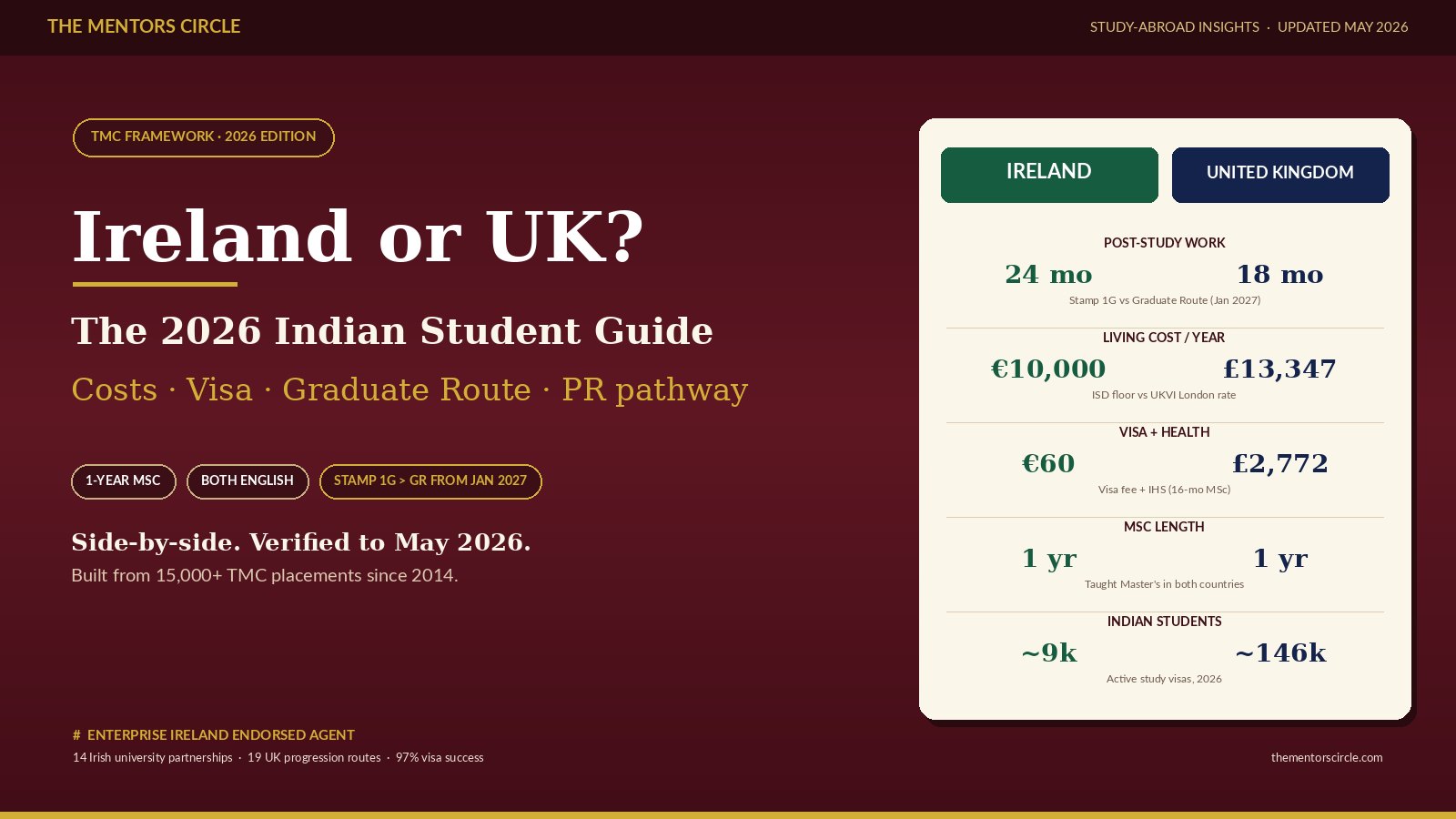
Ireland or UK 2026: Indian Student Comparison
Cost, jobs, visa and ROI compared — which is right for you.
Read the guide →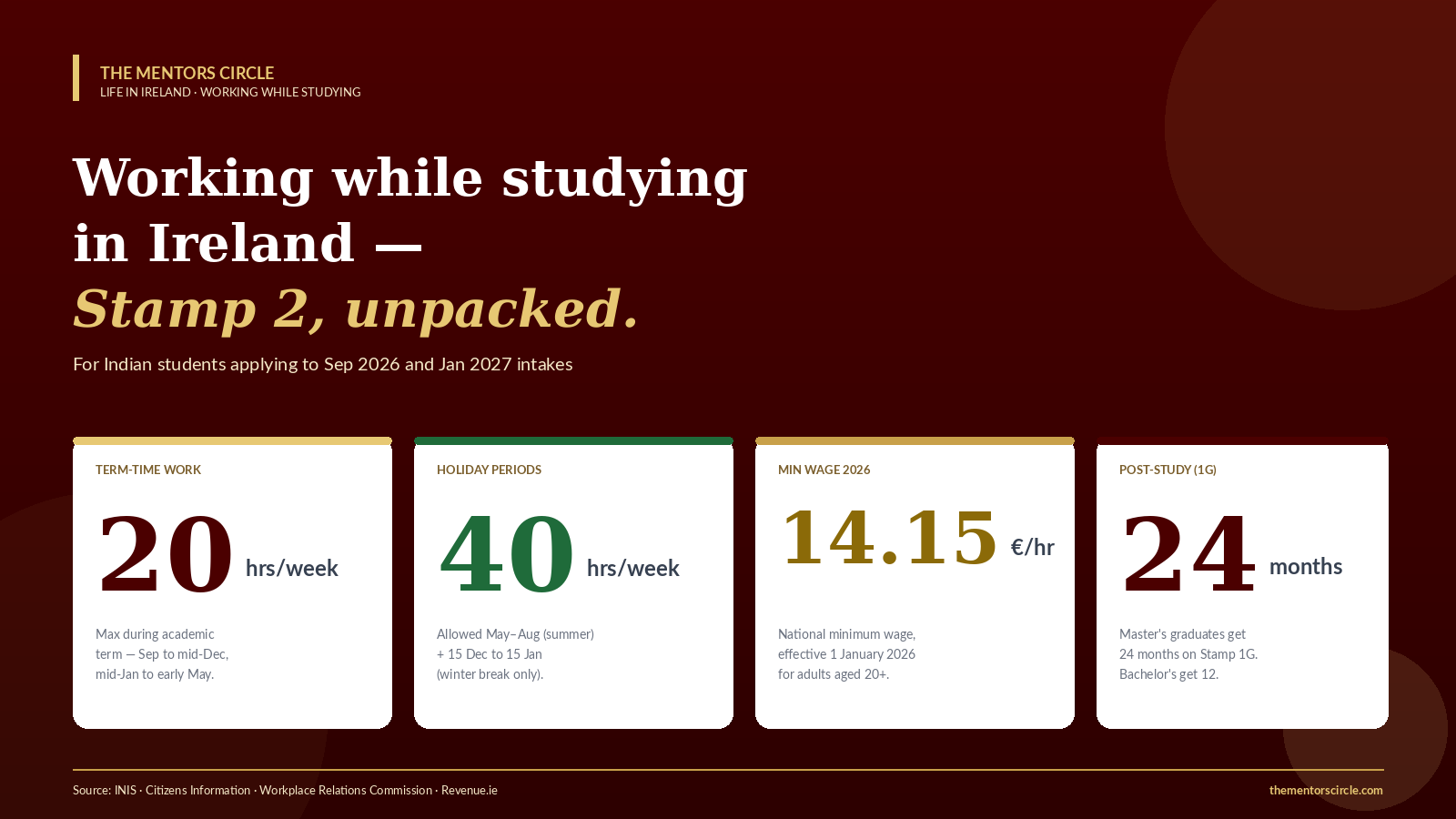
Working While Studying in Ireland — Stamp 2 Rules 2026
20 hours/week in term, 40 in vacation — the rules every student needs.
Read the guide →
Education Loan vs Family Funds: UK & Ireland Visa 2026
How each funding source is assessed — and which is safer for your file.
Read the guide →
Top 10 Ireland Courses with Mandatory Work Placement 2026
Placement-linked programmes convert best into jobs.
Read the guide →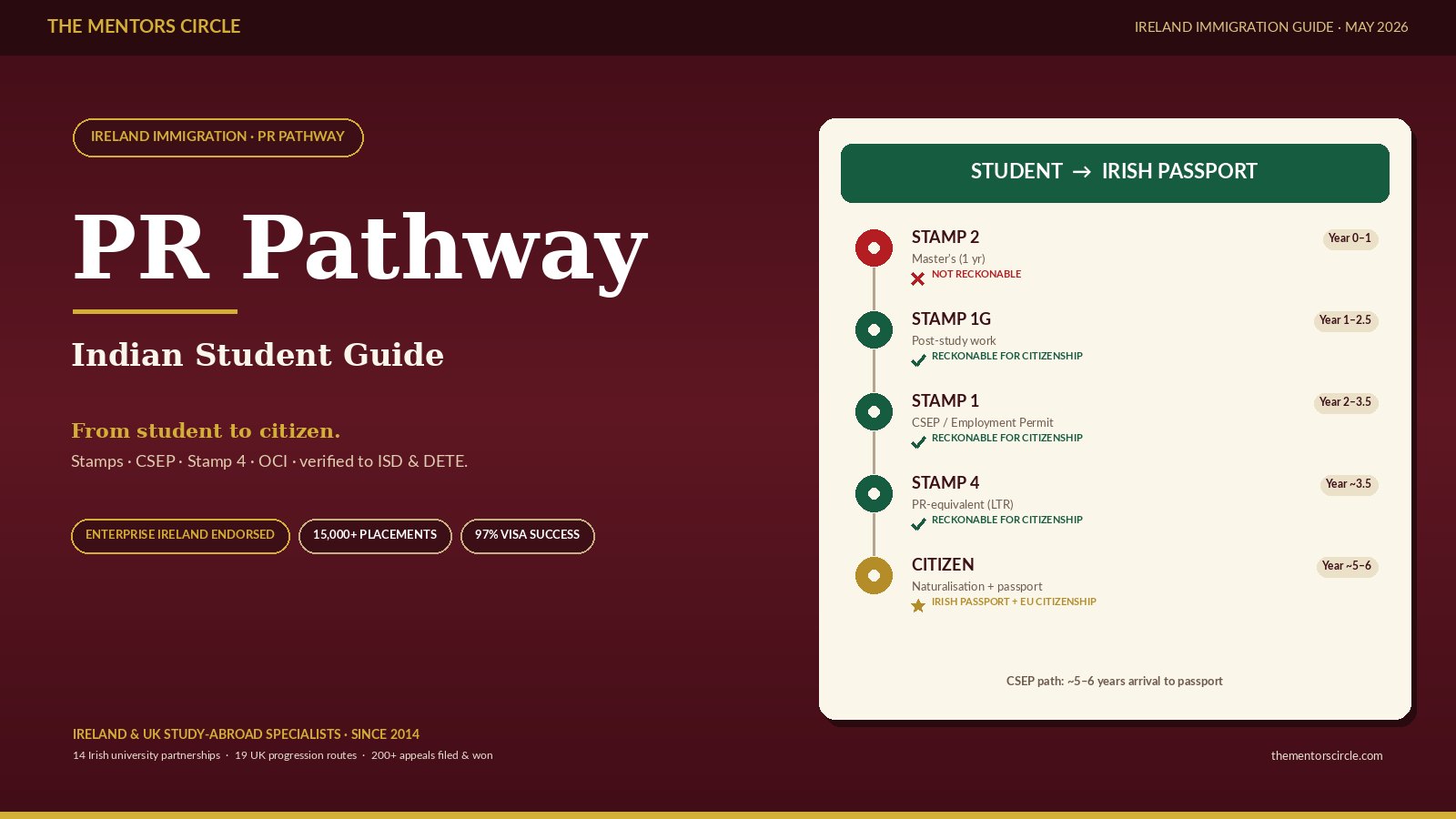
Ireland PR After Masters for Indian Students
The Stamp 1G to Critical Skills to Stamp 4 pathway, step by step.
Read the guide →Intake timeline
January & September 2027 intakes — month-by-month action calendar.
September 2026 is effectively closed. Two intakes are live now: January 2027 at selected universities — apply immediately — and September 2027 at all 14 partners, where applications open from 1 October 2026.
| Month | What you do | Why it matters |
|---|---|---|
| Now – Aug 2026 | Free counselling, pick your intake — January 2027 (selected universities) or September 2027 (all 14 partners) — and shortlist 5–7 courses. | Jan 2027 runs at DCU, University of Galway, Maynooth, ATU and TU Dublin among others; Sep 2027 opens every university. |
| Aug–Sep 2026 | Jan 2027 applicants: SOP, LORs, transcripts and English test NOW — submit via the TMC agent portal. | January-intake application windows close between October and early December 2026. |
| Oct 2026 | September 2027 applications OPEN — every university accepts applications from 1 October 2026. Early files go in first. | Earliest submissions get decisions in 14–30 days and the best scholarship pool. |
| Oct–Nov 2026 | Jan 2027: accept your offer, pay the deposit (€500–€1,000) and start the AVATS visa file immediately. | File the visa at least 8 weeks before travel — VFS slots tighten before Christmas. |
| Nov–Dec 2026 | Jan 2027: visa decision, accommodation, flights, pre-departure briefing — fly late December or early January. | Register with ISD within 90 days of landing to convert your visa to Stamp 2. |
| Oct 2026 – Feb 2027 | Sep 2027: applications submitted, conditional offers received. | Most partner-university decisions arrive within 21–30 days. |
| Feb–Apr 2027 | Sep 2027: accept the best offer, pay the deposit, apply for scholarships where a separate application is needed. | Scholarship rounds typically close February–April. |
| Apr–Jun 2027 | Sep 2027: education loan sanction, funds and six-month bank-statement history, AVATS form, VFS appointment. | Plan 8–12 weeks for visa processing — VFS slots in May–June fill fast. |
| Jul–Sep 2027 | Sep 2027: visa decision, accommodation, flights — then arrival, IRP registration with ISD, orientation, course start. | Register with ISD within 90 days to convert your visa to Stamp 2. |
How it works
Admission process for the 2027 intakes.
From your first call to your accommodation in Dublin — Mentors Circle handles the entire process end-to-end.
Shortlist universities and courses
Free counselling call. We assess your academic profile, work experience, and career goals — then build a 5–7 university shortlist — matched to your profile.
Prepare academic documents and SOP
10th, 12th, undergraduate transcripts, degree certificate, work experience letters (if applicable), 2 LORs, Statement of Purpose. We support SOP writing and review.
Apply via our official agent portal
We submit through direct agent portals at each Irish university — same channel the university's own admissions team uses. Typical decision turnaround: 14–20 days; some universities respond in 72 hours.
Receive offer and apply for scholarships
On offer, some universities automatically inform you of any scholarships awarded; others require a separate scholarship application. Average scholarships range €1,500–€5,000 with some up to full tuition.
Accept the offer — pay deposit
Accept by paying a deposit fee — typically €500–€1,000. We then begin your visa documentation immediately so you stay ahead of the September intake timeline.
Visa application via AVATS
Our dedicated visa counsellors guide you on AVATS submission, financial proofs, education loans, and embassy submission via VFS. We've handled thousands of Indian student visas for Ireland.
Accommodation, pre-departure, post-landing
We help finalise your accommodation in your study city before you fly. Pre-arrival briefing on banking, SIM card, transport, and first-week logistics. Post-arrival career support continues throughout your studies.
Visa file
Ireland student visa documents checklist (2026).
Documents can change based on policy. Use the official Irish Immigration Service checklist as the source of truth — this is the typical set we prepare for our students.
Application & identity
- AVATS online visa application form
- Valid passport + old passport (if applicable)
- Passport-sized photographs (per official specs)
- Proof of visa fee payment
- Police Clearance Certificate (PCC)
- Updated CV + Statement of Purpose
University & academic
- Offer letter and acceptance confirmation
- Tuition fee payment proof / deposit receipt
- 10th and 12th mark sheets / transcripts
- Undergraduate mark sheets and degree certificate
- English language test scores (IELTS / TOEFL / PTE) if required
- Experience letter / payslips (if employed)
Financial evidence
- Personal bank statement — last 6 months (applicant, mandatory)
- Sponsor bank statement — last 6 months
- Source-of-funds cover letter for all large credits
- Fixed Deposits with bank confirmation of liquidity
- Income Tax Returns (sponsor, last 2–3 years)
- Salary slips / Form 16 (salaried sponsors)
Logistics
- Proof of accommodation (if required)
- Medical insurance certificate
- Financial Summary Form
- Check & Verify Form
- Visa cover letter
- Any prior visa details (if applicable)
What refusal letters actually say
Why Ireland student visas get refused.
Every Irish visa refusal letter lists reason codes. After 12 years of Ireland files — our approvals, and the refusals students bring us from elsewhere — these are the codes we actually see, and what a well-prepared file does differently.
Refusal code F · Finances
The money exists — but the paper trail doesn't
The most common refusal we see. You must evidence paid tuition plus at least €10,000 for first-year living costs, with a six-month statement history. A large deposit landing two weeks before you apply — with no explanation of where it came from — reads as “parked funds” to the visa officer, even when the money is genuinely yours.
✓ How we prevent it
We build a funding matrix before filing: every large credit in the statements is mapped to a source document — salary, FD closure, property sale, education loan sanction — with a signed source-of-funds letter from the sponsor.
Refusal code OB · Obligations
The officer isn't convinced about your plans after the course
Ireland asks for evidence of your obligations to return home — family, assets, and a career logic that connects an Irish degree to your future. A file that never explains what happens after graduation, or leans on vague promises, invites this code.
✓ How we prevent it
Your SOP names the roles, sectors and employers the qualification unlocks. And if your plan is the 2-year Stamp 1G work visa, we state it honestly — it is a legal, intended pathway, and pretending otherwise reads as evasive.
Refusal code CP · Course purpose
“Why this course, why Ireland, why now” was never answered
A commerce graduate applying to MSc Cyber Security with no bridge. A five-year work gap left unexplained. A course at a level you already hold. Visa officers refuse when the academic progression doesn't make sense on paper — however good the student.
✓ How we prevent it
We test progression logic before applying, not after. If your profile doesn't support the course, we change the course shortlist — not the story. Every gap gets one honest paragraph, with evidence behind it.
Refusal code ID · Documentation
One missing document sinks the whole file
There is no interview for the Ireland study visa — the file speaks for you, alone. A missing sponsor document, an unattested affidavit, an expired passport page: the officer refuses. Nobody phones to ask for the missing piece.
✓ How we prevent it
Every file passes a document-by-document checklist, then a second senior counsellor does a “VO review” — reading it the way a visa officer would — before anything is submitted on AVATS.
Refusal code INCO · Inconsistencies
Your documents disagree with each other
Dates in the SOP that contradict the transcripts. Sponsor income in the ITR that doesn't match the bank statements. A name spelt three different ways. Contradictions are the most damaging signal a file can carry — they read as misrepresentation, not error.
✓ How we prevent it
One counsellor cross-reads every document against every other — dates, names, amounts — and each discrepancy is corrected or explained in the cover letter before filing.
Immigration history
A previous refusal you didn't address
Past visa refusals — Ireland or any other country — must be declared, and the officer will usually have the record anyway. An undeclared refusal is treated far more harshly than a declared one; a declared-but-unaddressed refusal simply repeats itself.
✓ How we prevent it
We declare every prior refusal, explain in the cover letter exactly what has changed since, and attach the evidence — so the officer reads a different file, not the same one twice.
Refused already? You have two months from the date on the refusal letter to appeal, free of charge — and an appeal that answers every code with new evidence, rather than resubmitting the same file, regularly overturns refusals. Send us your refusal letter and a senior Ireland counsellor will map each code to exactly what your file was missing. Preparing a fresh file? Start with the complete 2026 document checklist.
Student Testimonials
Straight from our students.
I had a wonderful experience with Mentors Circles for my Ireland student visa application. Akash Sir and Tomar Sir were extremely helpful, ensuring that all my documents were meticulously handled and every piece of guidance was duly provided. The entire process was seamless, and I faced zero hurdles. Grateful for thei…

I got my study visa and I'm starting my master's at NCI Ireland. The TMC team guided me through everything—from shortlisting universities to the visa application. Akash especially mentored me from start to finish, and the whole team answered every doubt I had. I'm really grateful it all worked out.

I would like to extend my heartfelt thanks to the entire Mentors Circle for being such a supportive and resourceful platform throughout my study abroad journey. A special shout-out to Akash for his incredible guidance and constant support during my admission and visa process. From helping me choose the right course and…

The people on your file
Who actually handles your Ireland application.
Real names, real files. The student quotes below are taken from published reviews — not written by us.
- UCD Regional Merit MBA Scholarship €27,202 — 70% of MBA tuition
- UCD Executive & Modular MBA Excellence Scholarship €19,430 — 50% of MBA tuition
- UCD International Student Scholarship €7,000 ×2
- UCC SEFS Merit Scholarship €5,600 ×2
- NCI Merit Scholarship €3,000–€5,000 ×6
- DCU Merit Scholarship €2,000–€5,000 ×4
- University of Galway merit awards €2,000–€5,000 ×2
- UCC Business & Law Merit Scholarship €3,950
- University of Limerick scholarships €2,000 ×2
- Griffith College Bursary €1,000–€3,000 ×2
Approved scholarships recorded in The Mentors Circle CRM across the September 2025 – January 2027 Ireland intakes · 25+ approvals · average award ≈ €4,300 · figures refreshed 26 July 2026.
Sakshi
Senior Counsellor
“A special thank you to Sakshi for being there whenever I needed help.” — Ridhi, UCD Dublin
Akash
Documentation & visa files
“Akash handled every document with great attention to detail.” — Mohammad, MSc Financial Risk Management
Jawahar Tomar
Founder
Leading The Mentors Circle since 2014, across the Mumbai and Noida offices.
A real file, start to finish
Ridhi Sharma — MSc Human Resources, University College Dublin
Ridhi applied for the MSc in Human Resources at UCD through our Noida office. Her file went through the same pipeline every Ireland application here follows: course shortlist matched to her profile, offer secured, then the AVATS visa file — finances, documents and SOP cross-checked against the refusal codes listed above before submission.
“From the start, the team was helpful, professional, and patient — answering every question and guiding me at each step,” she wrote after her visa came through.
✓ Visa approved — now at UCD, Dublin
Not stock photos
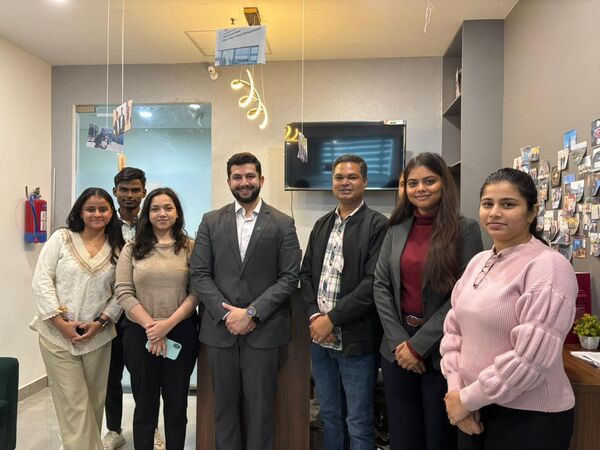
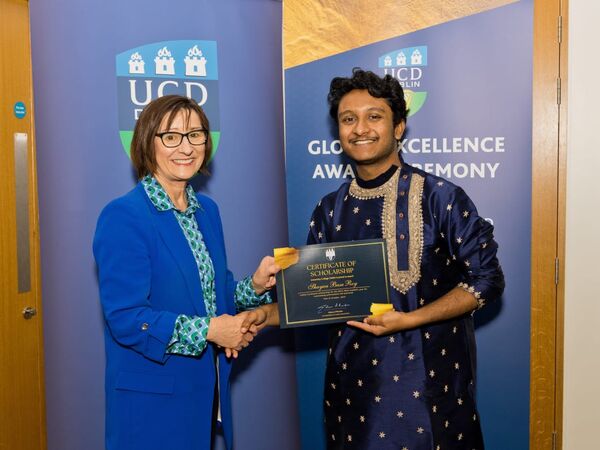
From our offices — not a photo bank.
University teams visit our offices; students walk in with their parents. This is what the work actually looks like.
Visa FAQs
Questions about the Irish student visa.
When can I apply for an Irish student visa from India?
How much money do I need to show for an Ireland student visa?
What documents are accepted as proof of funds?
Can a family member sponsor my Ireland student visa?
What is AVATS and how do I apply?
What is the visa fee for an Irish student visa?
How much does it cost to study in Ireland?
Are there scholarships for Indian students in Ireland?
How we help — end to end
One team, from first call to landing abroad.
All support, all free. One counsellor, one journey

Profile assessment & shortlisting
We start with your goals, grades and budget, then match you to the right country, course and universities you'll actually get into — not a generic list.

Applications & SOPs
We build and submit every application, write and refine your statement of purpose, and flag the scholarships you actually qualify for along the way.

Offers & admission
When offers arrive, we help you compare them honestly and lock the right one — deposits, CAS/enrolment and every deadline handled for you.

Scholarship strategy
We map every scholarship, waiver and bursary you actually qualify for and build the application around them — real money off your total cost.

Visa filing & interview prep
Document checklist, financial matrix, a visa-officer-ready file and mock interviews — the parts that make or break a decision, done properly.

Pre-departure briefing
A full pre-flight checklist and briefing — what to pack, what to expect on arrival, and how to hit the ground running in your new city.
Beyond admission
We set up your life abroad, not just your seat.
Getting in is only half of it. We help you sort the real-world things that make the move actually work — before you fly and after you land.
Education loan
Sanction-ready loan files at competitive rates through our lender partners — so funding never holds your plans back. No separate fee.
Accommodation
Student halls, private apartments or homestay — we help you find safe, budget-right housing near campus before you fly.
Banking
Open the right student bank account before you arrive, so your money is ready to use from day one.
Health cover
The correct student health insurance for your country and visa — arranged, so you land protected from day one.
Money transfer & forex
Safe, low-cost transfers for tuition and living costs — at rates that beat the airport counter, with no hidden markup.
SIM & connectivity
A local SIM and data plan sorted so you are reachable the moment you land — no scrambling for signal at arrivals.
We guide students to Ireland, UK, USA, Canada, Australia, and more
Six destinations. One specialist counsellor for each.
Each destination has a dedicated specialist at our offices who tracks visa rules, scholarship deadlines and graduate employment outcomes. Click through for country-specific costs, scholarships and university lists.
Not sure about Ireland?
Compare your other options.
Study in Ireland for Indian Students — 2026 Intake
The Mentors Circle is an Enterprise Ireland endorsed overseas education consultancy with direct admission partnerships at 14 Irish universities: Trinity College Dublin, University College Dublin, University College Cork, University of Galway, Dublin City University, Maynooth University, University of Limerick, Technological University Dublin, Atlantic Technological University, South East Technological University, Dundalk Institute of Technology, National College of Ireland, Dublin Business School, and Griffith College Dublin.
Ireland is the only English-speaking EU country and offers Indian students a 1-year master's degree (€12,000–€30,000 tuition) followed by a 2-year Stamp 1G post-study work visa with no employer sponsorship required. Critical Skills occupations — cyber security, data science, software engineering, pharmaceutical sciences, nursing, engineering — accelerate the pathway to Stamp 4 long-term residency after 2 years of qualifying employment.
Our free counselling for Ireland applicants covers university shortlisting, SOP and resume preparation, scholarship optimisation, AVATS visa documentation, education loan guidance, accommodation arrangements in Dublin, Cork, Galway or Limerick, and post-arrival career support. Every file is checked against the refusal codes listed above — finances, course purpose, documentation, consistency — before it is submitted on AVATS.
Walk in at our Mumbai HQ at Kanakia Wall Street, Andheri East, or our Noida office at Wave One Tower, Sector 18 — Monday to Saturday, 10 AM – 6 PM. The Mentors Circle — a unit of JKV Education Management Pvt Ltd. *Visa success rate based on applications submitted by TMC counsellors for September 2023–January 2026 intakes.
Plan your Ireland journey — with people who know it.
Free counselling. Personalised university shortlist. Scholarship assessment. Visa roadmap. A senior counsellor calls you within 24 hours.
Get My Free Plan →Prefer to talk in person? Meet our study abroad consultants in Noida — Sector 18, walk-ins welcome.